
Wayfinding Signage for Brisbane Businesses: A Practical Planning Guide
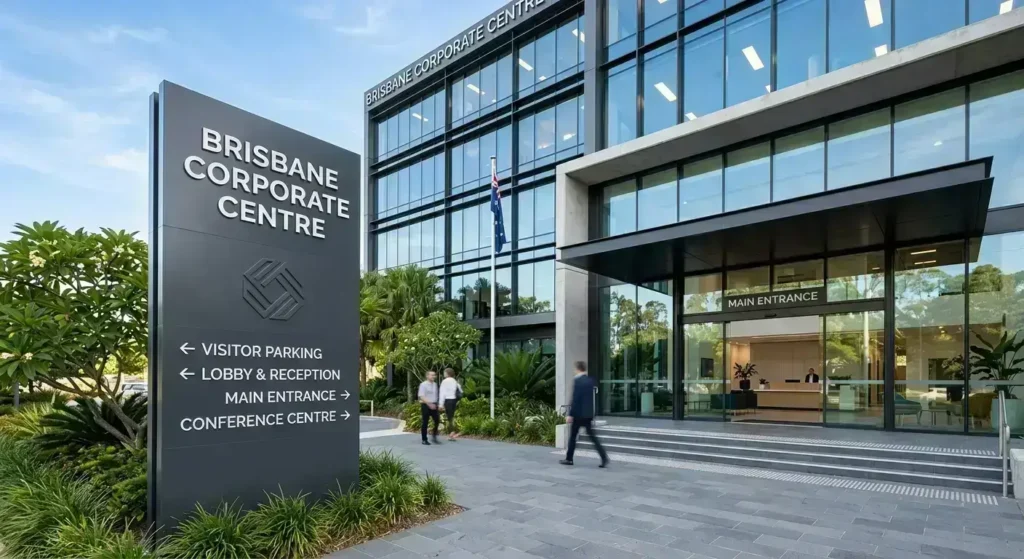
Wayfinding signage is the set of signs that tells people where they are, where to go and how to get there, from the street to the car park to the right door. For a Brisbane business with more than one entrance, level or tenant, good wayfinding means fewer wrong turns, fewer questions at reception and a better first impression. This guide covers the main types, how to plan them, which materials suit Queensland conditions and what to check before you order.
SignArt QLD designs, makes and installs signs from our Brendale workshop for businesses across Brisbane. This guide is written for owners, office managers and facilities teams who want practical answers rather than design theory.
What Is Wayfinding Signage and Why Does It Matter?
Wayfinding signage guides people through a building or site. It includes directional signs, level indicators, site maps and room numbers, and it works as a system rather than a set of one-off signs. Each sign answers the next question a visitor is likely to have.
Picture a first-time visitor arriving at a medical centre or a multi-tenant office. They find the street number, look for parking, search for the entrance, then need the right level and the right door. If any step is unclear, they stop, look around or ring the front desk. Clear signs remove those pauses, and they help staff too, because reception spends less time giving directions.
It also helps to separate wayfinding from brand signage. Your fascia or building sign tells people who you are. Wayfinding signage tells them what to do next. The two should look like they belong together, but they do different jobs and are read at different distances.
Types of Wayfinding Signage for Commercial Sites
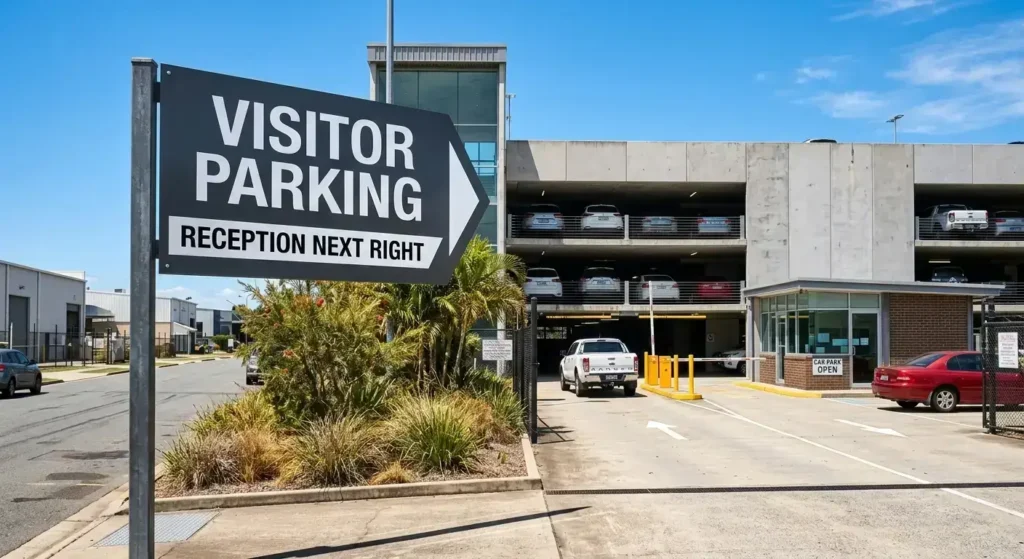
Most sites need a mix of the following. You rarely need all of them, but you should know which step of the visitor journey each one covers.
Exterior and Car Park Signs
These are the first signs a visitor meets. Entry and exit markers, visitor parking, loading zones and “reception this way” signs all sit here. Because they are read from a moving car or from several metres away, they need larger lettering and strong contrast. Aluminium, acrylic and dimensional letters are common choices for building signs, and many can be illuminated for early starts and late finishes.
Directional and Level Signs
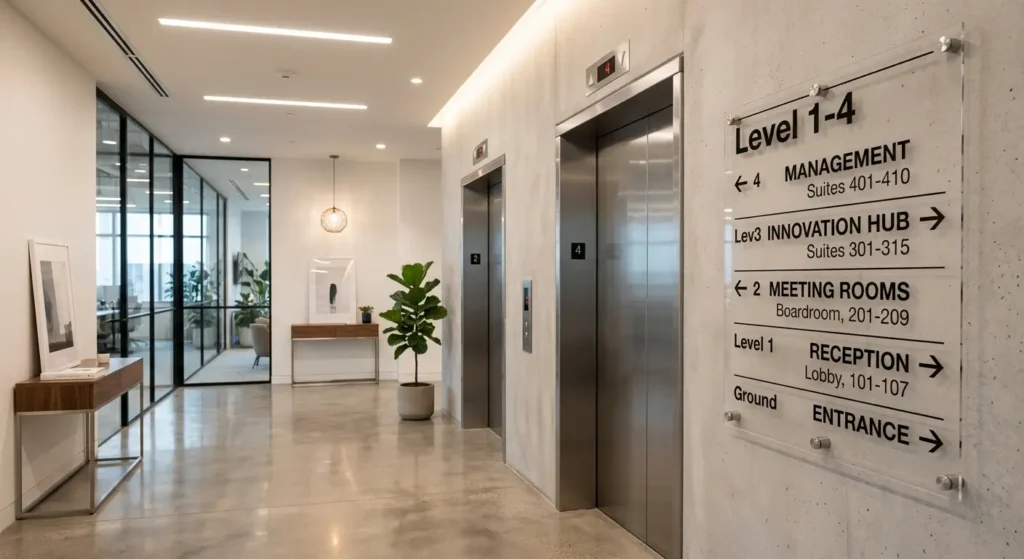
Inside, directional signs point the way at decision points such as lift lobbies, corridor intersections and stairwells. Level indicators confirm where a person is once they arrive. Keep arrows, wording and symbols consistent across every sign, or visitors start doubting the ones they have already followed.
Directories and Site Maps
Tenant directories and site maps suit buildings with several businesses or departments. They are the one sign people stop and read, so they can carry more detail than a directional sign. If tenants change often, ask your sign maker how entries can be updated without replacing the whole panel.
Door and Room Signs
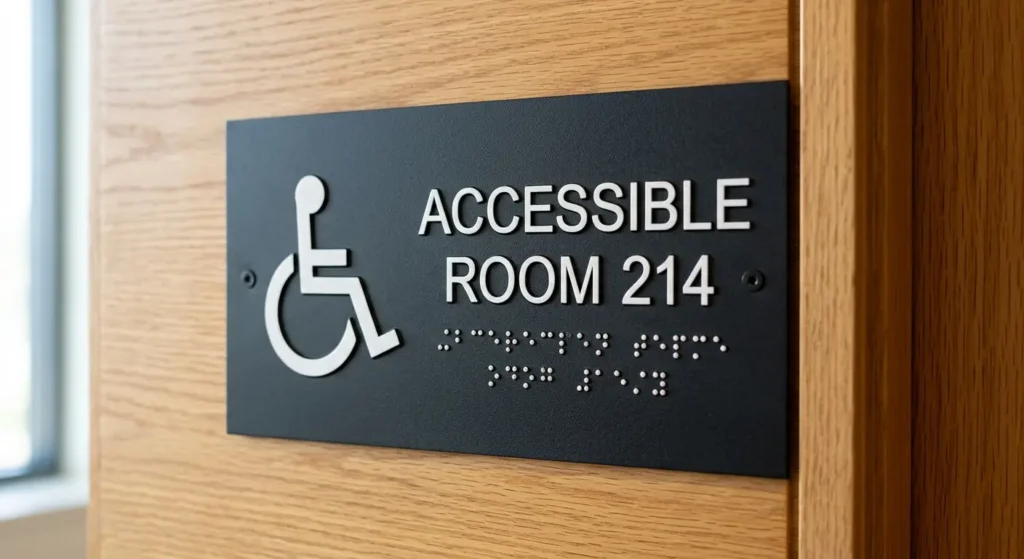
Door signs, meeting room signs and room numbers are the final step, confirming that the visitor has arrived. SignArt QLD makes door and room signs, tenant directories, meeting room signs and reception feature walls, and our architectural signage page sets out the interior range.
How to Plan Wayfinding Signage Before You Order
A short plan saves money and avoids reprints. Work through these steps in order.
- Walk the route as a first-time visitor, from the street to each destination, and note every point where someone could hesitate or turn the wrong way.
- List every destination: reception, toilets, lifts, meeting rooms, loading docks, first aid and exits.
- Settle the names. If it is “Reception” on the street sign, do not call it “Front Office” on the door.
- Rank the signs. Primary signs are for the street and car park, secondary signs give direction, and tertiary signs identify rooms.
- Match your brand. Colours, fonts and materials should follow your brand guidelines so the system feels planned.
- Allow for change, such as new tenants, renamed rooms or a future refit.
Bring a floor plan or site plan to the first conversation. At SignArt QLD we talk through your building, brand and timeline, design the signs and share drawings for your approval, then make everything and install it on site. For offices, our corporate signage page shows how we start from your brand guidelines.
Choosing Materials for Wayfinding Signage in Queensland

Queensland sun and storms are hard on exterior signs. Strong UV can fade weaker materials, and wind and heavy rain test fixings, so we recommend materials that suit local conditions rather than the cheapest option. Indoors, you can choose more freely because the main concern is how often the sign is touched and cleaned. Ask how each material is cleaned and what fixings are used, so day-to-day maintenance stays simple for your team.
For outdoor signs, aluminium and acrylic are common starting points. Our in-house laser and router cutting at Brendale handles acrylic, aluminium and timber, which helps when arrows, symbols or logos need custom shapes. You can read more on our laser and router cutting page.
Glass entrances and office partitions are another option. Frosted glass signage lets you add room names or directions to glazing while keeping the space bright. Where a sign must be read after dark, such as a car park entry or after-hours entrance, ask about illumination at the design stage.
Wayfinding Signage for Different Brisbane Industries
Every site has its own visitor pattern, so the right signs differ by industry.
Offices and corporate sites. Reception is the first place clients look, and a clear set of door signs, meeting room signs and directories keeps visitors moving and cuts interruptions at the front desk.
Hotels and motels. Guests often arrive tired and after dark. They need obvious directions to reception, parking and rooms, plus legible room numbers. We cover room, wayfinding and exterior signs on our hotel signage page.
Medical and healthcare. Patients may be unwell or anxious, so wording should be plain and the route obvious. Signs in these spaces are touched and moved more often, so they need to be sturdy. See our healthcare signage page for directional signs and room identification.
Council, Landlord and Accessibility Checks for Wayfinding Signage
Not every sign needs approval, but some do. Brisbane City Council regulates advertising devices under the Advertising Devices Local Law 2021. Some devices can be displayed without an application if they meet Council’s permitted designation, others need approval, and a heritage place needs approval even if the device would otherwise be permitted. Read Brisbane City Council’s advertising device guidance before you commit to external signs.
Whether a particular sign counts as an advertising device depends on its content, size and location, so check first. Depending on the sign, your site may also need council approval, and SignArt QLD can help with landlord and council requirements.
If you lease, your landlord or building manager may have rules on sign position, materials and tenant naming. Get written sign-off early so drawings only need approving once.
Accessibility also matters. Standards Australia notes that AS 1428.1:2021 covers signage topics such as tactile and Braille requirements and international symbols, with wayfinding guidance sitting in other parts of the standard. Confirm what applies to your building with your certifier or an accessibility consultant before you finalise any sign that must meet it.
Common Wayfinding Signage Mistakes to Avoid
Most problems come from planning, not manufacturing. These are the ones we see most often.
- Too many signs. Clutter hides the important ones, so place signs at decision points only.
- Inconsistent names, symbols or arrows from one sign to the next.
- Low contrast or small lettering that cannot be read from the real viewing distance.
- Signs placed where an open door, plant or parked vehicle blocks them.
- Weak materials in high-touch or sun-exposed spots.
- Forgetting night-time use and how the route looks after dark.
A quick test helps: ask someone who has never visited to find three destinations using only the signs. Wherever they hesitate, a sign is missing, badly placed or unclear. Fixing it before installation is far cheaper than after.
Working With a Brisbane Sign Maker on Wayfinding Projects
A single supplier that designs, makes and installs keeps lettering, materials and finishes consistent across the whole system. SignArt QLD is based in Brendale and provides signage Brisbane wide, including Toowong and North Lakes. Our team has over ten years of experience and has delivered more than 2,000 projects, and every sign is installed by our own team.
If you are planning wayfinding for a new fit-out, a refurbishment or an existing site that confuses visitors, we are happy to talk it through. Visit us at 233 Leitchs Road, Brendale QLD 4500, call 07 3881 1185 (Monday to Friday, 7:30am to 4:30pm) or contact SignArt QLD to arrange a quote.