Fascia Signs in Brisbane: A Practical Guide for Business Owners
Quick answer: Fascia signs are signs fixed to the fascia of a building, the vertical board or band below the roof edge or awning, that display a business name and logo above the entrance. For a Brisbane business, the main decisions are the material, whether to illuminate the sign, the size, and whether council or landlord approval is needed before anything goes up.
This guide is written for shop owners, office tenants and property managers in Brisbane and South East Queensland who are planning a new sign or replacing a tired one. It covers the types on offer, how Queensland weather affects your choices, the approval steps to check first, and what drives the price. SignArt QLD designs, manufactures and installs commercial signage from its workshop at 233 Leitchs Road, Brendale.
What Are Fascia Signs?
A fascia is the face of the building above the shopfront or under the awning. Fascia signs sit on that surface, or just in front of it, so they are the first thing customers see from the footpath or the car park. Brisbane City Council describes a building fascia as the vertical board below the building’s roof edge, which is a useful definition when you measure up.
Because the fascia is fixed and highly visible, it usually carries the most important branding a business has: the name, the logo and sometimes a short descriptor such as “Dental Clinic” or “Hardware”. A well-planned sign in this spot does the work of introducing your business to everyone who walks, drives or rides past, every day it trades.
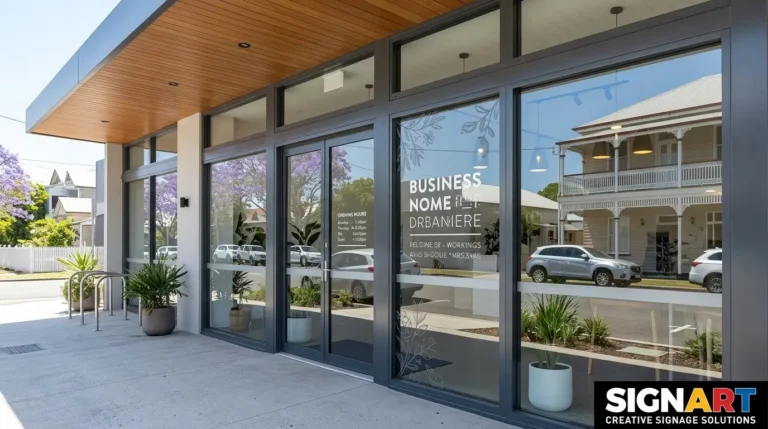
This kind of sign is a standard part of shop front signs and wider building signage, so you will often see it quoted alongside window graphics, door vinyl and projecting signs as part of one shopfront package.
Common Formats for Your Building Fascia
There is no single best format. The right choice depends on your brand, the building and how much you want the sign to stand out after dark.
Flat Panel Options
A flat panel is a printed or cut panel fixed across the fascia. It is the simplest and usually the most affordable option, and it suits businesses that want clear, clean branding without much depth. SignArt QLD lists flat panel fascia signs among the shop front options it supplies.
3D Letter and Pin-Mounted Options
Raised letters, including pin-mounted acrylic letters, stand slightly off the wall and cast soft shadows in daylight. They give a premium look and suit professional services, boutiques and hospitality. 3D and illuminated signs can also be lit so the lettering reads at night.
Illuminated Options
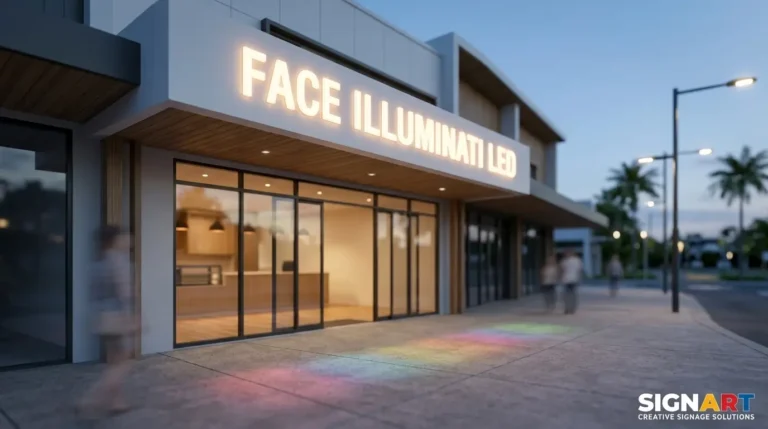
Illuminated fascia signs use LED lighting so the sign remains visible after dark. Options include lightboxes, halo-lit letters and backlit panels. A lightbox sign places LEDs behind a graphic panel so the artwork glows evenly. If your trading hours run into the evening, a lit sign can keep working for you when the street is dark.
Choosing Materials for Queensland Conditions
These signs live outdoors, facing the weather all year. Strong sun, summer storms and humidity are part of daily life in Brisbane, so the material matters as much as the design.
Aluminium is a common choice because it is lightweight and corrosion resistant. SignArt QLD’s aluminium signs page describes powder-coated aluminium as built to last ten or more years outdoors without rusting, and its building signs page describes aluminium as UV resistant. Acrylic suits 3D lettering and depth effects. Aluminium composite panels and flex face materials are also used for larger illuminated signs.
When you compare quotes, ask what the face is made from, how it is finished and how it is fixed to the building. A sign that looks good on installation day but fades or warps in a few summers is poor value, whatever the starting price.
Basic care is simple. Washing with mild soap and a soft cloth and avoiding abrasive tools keeps most aluminium signs looking sharp, and recoating is recommended if the protective layer begins to wear. Illuminated signs should also be checked now and then, because LED modules can be replaced if one fails.
Council Rules for Fascia Signs in Brisbane
Many business owners assume a sign on their own shopfront needs no paperwork. Sometimes that is true, and sometimes it is not, so check before you order.
According to Brisbane City Council’s advertising devices page, self-assessable advertising devices can be displayed without applying for council approval, provided they comply with the Permitted Advertising Devices Designation. For a building fascia sign to qualify, it must fit within the outline of the fascia and must not exceed 600 mm in height.
The same page makes three other points worth knowing. A sign on a heritage place always needs approval, even where it would otherwise be permitted. Prohibited devices cannot be approved at all. And where approval is required, fees apply when you lodge the application. The business.gov.au advertising device approval guide also explains that a sign which is not self-assessable may need development approval first, and that an application must include written consent from the owner or occupier of the place where the sign will be displayed.
Rules and fees change, so confirm the current position with Brisbane City Council on 07 3403 8888 before you commit. SignArt QLD’s shop front page says some signs may need development approval from council and that the team can help with the application. Signs outside the Brisbane City Council area, such as in Moreton Bay, Ipswich or Logan, fall under those councils’ own rules.
Landlord and Building Approval
Even when council does not need to be involved, your landlord probably does. If you lease your premises, start with these checks:
- Read your lease for signage clauses, including who owns the fascia and who pays for removal at the end of the lease.
- Ask the landlord or property manager for written consent to the size, position and design.
- Find out whether the building or shopping centre has signage guidelines about colours, illumination or fixing methods.
- Confirm who is responsible for making good the wall after the sign is removed.
Getting this in writing early avoids the expensive situation where a finished sign has to come down. If the site is strata titled, the body corporate may also have a say over external changes.
Planning Size, Readability and Position
A sign is only useful if people can read it quickly. These practical points apply to most shopfronts:
- Keep the message short. A name, a logo and one descriptor usually work better than a list of services. Customers glance at a fascia for a second or two.
- Prioritise contrast. Light letters on a dark background, or the reverse, read well from a distance. Thin, low-contrast lettering disappears in bright Queensland sun.
- Work with the building. Measure the full fascia, note any downpipes, lights, cameras or awning brackets, and design around them rather than over them.
- Check sightlines. Trees, power poles, parked vehicles and neighbouring signs can block the view. Stand across the road and look at the spot before you finalise the design.
- Consider night-time. If you trade after dark, decide early whether the sign will be lit, because power supply affects the design and the installation.
A good sign also matches the rest of the shopfront. Window graphics, door vinyl and the fascia should look like one brand, not three separate jobs.
Replacing or Updating an Existing Fascia
Many Brisbane businesses are not starting from a blank wall. If you are taking over a tenancy or refreshing an old sign, look at the condition of the fascia before you design anything. Faded panels, rusted fixings, cracked acrylic and patched holes from previous signs all affect how the new sign looks and how it is fixed.
It is also worth asking whether the existing sign was approved. The business.gov.au guide notes that taking over an existing sign, or changing it, can require a new application, and it suggests searching council records. Cleaning, repainting or repairing the fascia before the new sign goes up often makes a bigger difference to the finished look than owners expect.
What Affects the Cost of Fascia Signs?
There is no honest single price for fascia signs, because every building and brief is different. SignArt QLD’s shop front page says a flat panel sign may start at a few hundred dollars, while illuminated 3D letter signs can cost several thousand, and free quotes are offered. The main cost drivers are:
- The size of the sign and the length of the fascia.
- The material, finish and thickness.
- Whether the sign is flat, raised or illuminated.
- Electrical work. Illuminated signs must be connected to mains power by a licensed electrician.
- Access to the site, including how high the fascia is and whether equipment is needed.
- Any approvals and the time they take.
To compare quotes fairly, give each supplier the same measurements, photos of the fascia and a clear description of what you want. A lower price is only a saving if the materials, fixing and installation match.
How SignArt QLD Handles Fascia Work
SignArt QLD describes a six-step process: consultation, design proposal, material and installation planning, manufacturing, installation and aftercare. Signs are made at the Brendale workshop and installed by the SignArt team rather than outsourced. The business serves Brisbane suburbs and South East Queensland, including the Gold Coast, Sunshine Coast, Ipswich, Logan and Redlands.
The most useful thing you can bring to a first conversation is a photo of the fascia, rough measurements and your logo files. From there, the team can talk through materials, lighting and approvals for your site.
Next Steps for Your Sign
Well-planned fascia signs give a Brisbane business a strong, lasting first impression. Check the fascia size against council’s self-assessable limits, get landlord consent in writing, choose a material suited to Queensland weather, and decide early whether you want lighting. If you would like help, contact SignArt QLD on 07 3881 1185 or at info@signartqld.com.au. The workshop is open Monday to Friday, 7:30am to 4:30pm.
Frequently Asked Questions
What are fascia signs?
Fascia signs are signs fixed to the fascia of a building, the vertical board or band below the roof edge or awning. They display a business name and logo above the entrance and are often the main sign customers see from the street.
Do I need council approval for fascia signs in Brisbane?
Not always. Brisbane City Council says self-assessable advertising devices can be displayed without approval, and a building fascia sign qualifies if it fits within the fascia outline and is no more than 600 mm high. Heritage places always need approval, so confirm with council first.
What are fascia signs made from?
Common materials include aluminium, acrylic, aluminium composite panels and flex face materials. Aluminium suits outdoor use because it is lightweight and corrosion resistant, while acrylic is popular for 3D lettering and depth effects.
How long do outdoor fascia signs last?
It depends on the material, finish and exposure. SignArt QLD’s shop front page gives a lifespan of 7 to 10 years outdoors in Brisbane conditions, and its aluminium page says powder-coated aluminium signs are built to last 10 or more years. Good care helps.
How much do fascia signs cost in Brisbane?
Cost varies with size, material, lighting and access. SignArt QLD says a flat panel sign may start at a few hundred dollars, while illuminated 3D letter signs can cost several thousand. A free quote based on your measurements gives the clearest answer.
Can fascia signs be illuminated?
Yes. Illuminated fascia signs use LED lighting in formats such as lightboxes, halo-lit letters and backlit panels. Illuminated signs must be connected to mains power by a licensed electrician, which SignArt QLD can coordinate as part of installation.
Do I need my landlord's permission for a fascia sign?
If you lease the premises, yes, you should get written consent before ordering. Check your lease for signage clauses and ask who is responsible for removing the sign and repairing the wall when the lease ends.
What is the difference between a fascia sign and a shop front sign?
A fascia sign is one type of shop front sign, fixed to the fascia above the entrance. Shop front signage can also include window graphics, door vinyl, projecting signs and A-frames, which work together as one package.
Who installs fascia signs in Brisbane?
SignArt QLD designs, makes and installs its signs using its own team from the Brendale workshop. It services Brisbane suburbs and South East Queensland, including the Gold Coast, Sunshine Coast, Ipswich, Logan and Redlands.
How do I get started with a new fascia sign?
Photograph the fascia, take rough measurements, gather your logo files and check your lease. Then contact SignArt QLD on 07 3881 1185 or at info@signartqld.com.au for a free quote and advice on materials, lighting and approvals.
Creative Signage Solutions for Brisbane & North Lakes businesses. We design, manufacture & install commercial signs that get you noticed.